
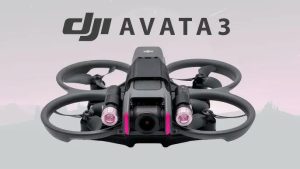
DJI Avata 3
Let me be upfront with you.
I’ve been flying drones since before most people knew what a gimbal was. I’ve strapped GoPros to homemade frames with zip ties. I’ve crashed a Phantom 2 into a lake in Iceland — and yes, I went in after it. I’ve reviewed drones that promised everything and delivered mediocrity dressed in carbon fiber.
So when leaks started circulating about the DJI Avata 3, my first instinct was the same one I always have: skepticism.
Then I looked at the numbers. Really looked at them.
And something shifted.
The Problem With FPV — And Why Most People Never Stick With It
Here’s what nobody tells you when you buy your first FPV drone: you’re not buying a drone. You’re signing up for a hobby that will humble you, frustrate you, and cost you money in ways you didn’t anticipate.
The learning curve is brutal. I’m not exaggerating. Most people who buy a traditional FPV racing quad spend the first three months doing nothing but crashing in a simulator before they dare fly the real thing outdoors. And even then, their first flights look like a ceiling fan falling down a staircase.
DJI understood this. When the original Avata came out, I was cautiously impressed. When the Avata 2 landed, I was genuinely impressed. The Motion Controller — that wand-like thing you wave around like you’re casting a spell — actually worked. It translated your instincts into flight. That was no small thing.
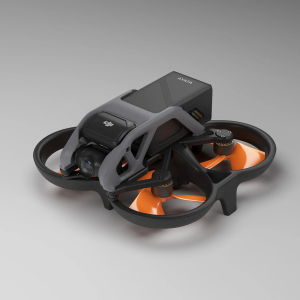
But both drones had ceilings. Literal and figurative ones.
Battery life was the real killer. You’d set up, frame a location, get into a rhythm — and then fifteen minutes later you’re landing and swapping batteries. The creative momentum dies every single time.
If the leaked specs on the Avata 3 are accurate, that problem is gone.
Twenty-Eight Minutes. Read That Again.
The rumored flight time for the Avata 3 is 28 minutes.
For context: most capable FPV drones fly 10 to 15 minutes on a good day, in calm conditions, with conservative throttle. The Avata 2 stretched to around 23 minutes. Meaningful, but still limiting. DJI
Twenty-eight minutes is a different category of experience entirely. That’s enough time to scout a location, find your angles, and actually execute the shots you came for — without the anxiety of a blinking battery indicator killing your focus halfway through.
I’ve shot documentary work where an entire usable sequence came from one unbroken six-minute flight. With 28 minutes available, you can attempt that sequence four times, refine it, and still have runway left. For anyone doing serious content work, that’s the difference between a tool and a weapon.
The Camera Situation Is More Interesting Than the Headline Suggests
On paper, the move from a 1/1.7-inch sensor to a 1/1.3-inch CMOS sounds like a modest spec bump. In practice, it’s the kind of change that rewrites what you can shoot.
That larger sensor surface means more light captured per pixel. Which means the Avata 3 — if these specs hold — becomes a viable camera in conditions where the Avata 2 started to struggle. Dusk. Forest canopy. Overcast coastal mornings. The exact environments where the most interesting footage tends to exist.
Add 4K at 60 frames per second and you have genuine slow-motion capability at full resolution. That low-altitude dive over a river? Now you can stretch it, study it, milk every frame of it. That matters.
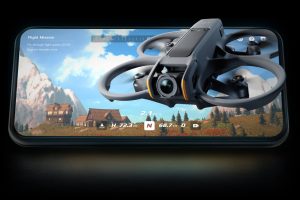
What I’m watching closely is dynamic range. Specs don’t tell you that story. Only real-world tests do. But the sensor pedigree here suggests DJI has been paying attention to the right problems.
O4+: Why the Transmission System Is the Unsung Hero
Most people fixate on cameras and flight time. Seasoned pilots obsess over the link.
The O3 system in the Avata 2 was good. Genuinely good. But in dense urban environments — narrow streets, steel-framed buildings, crowds of competing wireless signals — you’d occasionally feel it breathing. A micro-stutter. A moment of hesitation. Nothing catastrophic, but enough to remind you the connection wasn’t absolute.
O4+ changes the conversation. The improvements in signal penetration and latency reduction aren’t just incremental. They represent a different philosophy: the link should be invisible. You should fly and never once think about whether the drone heard you.
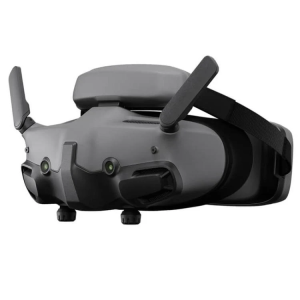
For cinematic work, that confidence is everything. You can commit to a shot through a gap in a bridge, through a tunnel, through a stand of trees — knowing the drone is with you. That psychological freedom produces better footage. Every time.
On the AI Flight Modes — I’ll Reserve Judgment, But Here’s My Honest Take
Every drone company is saying the words “AI flight modes” right now. Most of them mean very little.
DJI, however, has a track record that earns them some benefit of the doubt. QuickShots weren’t gimmicks. Hyperlapse wasn’t a gimmick. MasterShots, for all its hokiness in demo videos, genuinely helped beginners produce watchable footage on day one.
The rumored Avata 3 AI modes — automated flips, rolls, low-altitude dives triggered by gesture or button — are interesting not because experienced pilots need them. We don’t. They’re interesting because they lower the floor for everyone else.
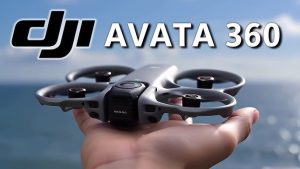
If a first-time flyer can execute a barrel roll on their third flight, that’s not dumbing down the craft. That’s expanding who gets to participate in it. And more people making interesting aerial content is good for the entire ecosystem.
What I’ll be testing immediately: how much creative control you retain within these modes. Automation that produces generic results is useless to me. Automation that handles the mechanical execution while I focus on composition and timing — that’s a collaborator.
Who Actually Should Buy This?
I want to be direct here, because too many drone reviews answer this question dishonestly.
You should seriously consider the Avata 3 if: you’re creating travel or adventure content and feel limited by the locked-off aerial perspective that traditional drones give you. The Avata’s ability to move through environments — not just above them — opens a visual language that’s genuinely different. Viewers feel it even when they can’t name it.
You should wait if: you’re a beginner who hasn’t flown anything yet. Start with a Mavic Mini. Understand airspace. Understand basic flight dynamics. Come to the Avata experience with some foundation, and you’ll get exponentially more from it.
You should skip it if: you’re a racing pilot who wants raw speed and doesn’t care about video quality. The Avata is not built for you, and no amount of Sport Mode will change that. Get a proper racing quad.
You’re the perfect buyer if: you already own an Avata 2, you know exactly what frustrated you about it, and you’re watching this release to see whether those specific frustrations have been addressed. Based on what I know so far — most of them have.
The Price Is What It Is
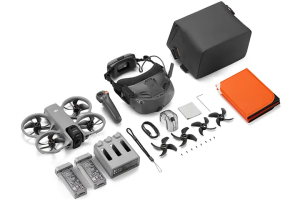
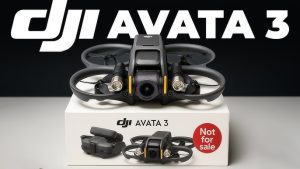
The expected range of €999 to €1,350 depending on the bundle will feel steep to some people. I understand that reaction. I also think it’s the wrong frame.
If you’re using this drone professionally — and by professionally I mean generating income from the footage it produces — the math works out very quickly. One commissioned travel video, one real estate shoot, one brand campaign. The drone pays for itself.
If you’re a hobbyist with serious creative ambitions, the question is whether this tool will meaningfully elevate your work. Based on the specs, based on the trajectory of this product line, based on six years of watching DJI execute on their promises more consistently than almost anyone else in consumer hardware — yes. I think it will.
My Honest Position Right Now
I haven’t held this drone in my hands. I haven’t flown it. The specs I’ve outlined here are based on credible leaks, not official confirmation, and DJI has surprised me before — in both directions.
What I can tell you is that the shape of this product, the problems it’s designed to solve, and the direction DJI has been moving for the past three years all point toward something worth paying attention to.
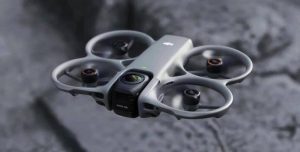
When I get my hands on a unit, I’ll run it through the conditions that actually matter: low light, interference-heavy environments, long creative sessions, side-by-side comparison with the Avata 2. I’ll tell you exactly what changed and whether it was worth the upgrade.
Until then — if you’ve been sitting on the fence about FPV — start watching this space. The fence might be about to get a lot easier to climb over.
Got questions before the official launch? Drop them in the comments. I read everything, and the good ones shape what I focus on in my full review.
Filed under: DJI · FPV Drones · Gear Reviews · 2026 Releases